Designing Truly Inclusive Kitchens
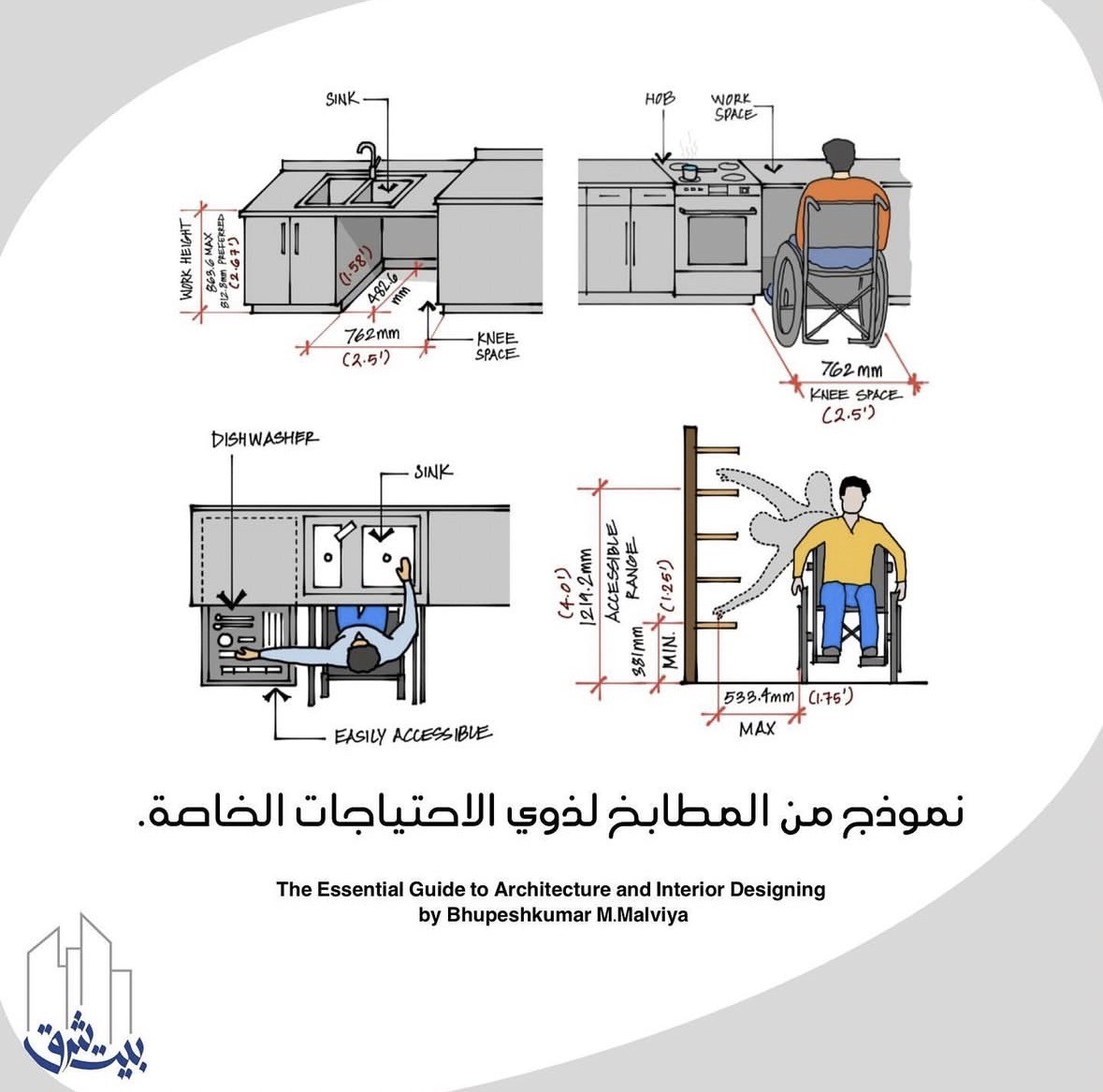
A truly functional kitchen is one that supports the independence of all users. This diagram outlines critical dimensions and clearances necessary to transform a standard kitchen into an accessible one, specifically demonstrating layouts for wheelchair users.
Key Accessibility Standards Illustrated:
Knee Space is Non-Negotiable: Both at the sink and the cooktop/hob, the 762 mm (2.5') Knee Space is vital. This allows the user to pull right up to the counter, providing a safer, closer approach to wet and hot areas.
Appropriate Work Height: The Work Height (often around 864 mm or 2.83') is lowered compared to standard counters to better accommodate someone seated.
Accessible Storage: Storage is designed within the Accessible Range (581 mm MIN to 1219.2 mm MAX), ensuring that daily items are within easy reach and eliminating the need to strain or over-reach.
Dishwasher Placement: Placing the dishwasher and sink in a location that allows a seated person to comfortably access the appliances is crucial for daily chores.
This is a powerful example of Universal Design—creating spaces that are inherently accessible to people regardless of age, size, or ability. Good design means enabling everyone to safely and easily prepare a meal.
Do you think these accessible standards should be mandatory in all new home builds?